The Anatomy of Natural Dyes: Botanical Pigments in Modern Fiber Art
Rethinking the Botanical Palette in Contemporary Fiber Design
Natural dyeing has an appealing contradiction at its heart. The process begins with leaves, roots, flowers, bark, or kitchen scraps, yet the finished textile may need to meet the exacting standards of a gallery, archive, or design collection. A softly mottled skein can look wonderfully rustic, but exhibition-grade work demands more than an attractive first impression. It requires color that survives handling, washing, and controlled light exposure, with enough consistency to support a repeatable body of work. For makers developing a modern textile practice, the essential shift is from casual extraction to deliberate control.
That distinction explains why berry dyes so often disappoint. Anthocyanins in blackberries, elderberries, and sloes can produce seductive violet, pink, and wine shades, but their color may collapse toward beige or brown after light and washing. Historical tinctorial plants such as madder and indigo endure because their principal colorants possess different molecular structures and can be made more firmly compatible with fiber. The chemical bridge between a plant and a permanent textile involves three connected decisions: how the pigment is extracted, how the fiber is prepared to receive it, and how heat, pH, oxygen, and metallic salts are managed throughout the bath.
Substrate Chemistry and the Architecture of Mordanting
Fiber is not a neutral canvas. Wool and silk are protein fibers built from amino-acid chains, while linen and cotton are cellulose fibers composed primarily of glucose-based polymers. Their surfaces, swelling behavior, and available binding sites differ substantially. Protein fibers generally accept many natural colorants readily, particularly when treated with alum, because their functional groups can interact with dye molecules and metal complexes. Cellulose is less naturally receptive to many botanical dyes, so it usually needs more thorough preparation before a stable color can develop.
A mordant functions as a chemical intermediary. Aluminum, iron, copper, and tin salts can form coordination complexes with color-bearing organic molecules, creating a larger dye-mordant structure that has greater affinity for the fiber. The result is not simply a coating on the surface. When preparation is effective, the colorant is held within or against the fiber structure strongly enough to improve depth, evenness, and resistance to removal. Mordant choice also changes the visual character of the final textile. Alum tends to preserve clear, bright colors, iron commonly deepens and dulls them, and tin can push some reds toward fiery orange.
For plant fibers, a two-stage protocol is especially useful. First, scour the material thoroughly to remove waxes, pectins, oils, and spinning residues. A tannin treatment can then provide phenolic sites that help anchor a subsequent aluminum mordant. Aluminum acetate is often used for cotton and linen, followed by a calcium carbonate bath that helps fix or neutralize the treatment. A practical studio sequence is:
- Scour completely so the mordant and dye can reach the fiber evenly.
- Apply tannin to create additional bonding sites on cellulose.
- Mordant with alum or aluminum acetate according to the fiber and recipe.
- Rinse and rest the material before dyeing, allowing the treatment to settle into the substrate.
Aluminum acetate procedures commonly use a quantity around 10 percent of the fiber weight, while exact concentrations depend on the recipe, fiber preparation, and desired shade. Keep a dedicated scale and record the weight of dry goods, since every later calculation depends on that figure. A beautifully extracted dye cannot compensate for uneven scouring or an under-mordanted cellulose fabric.
Mastering Historical Dyestuffs and Their Color Profiles
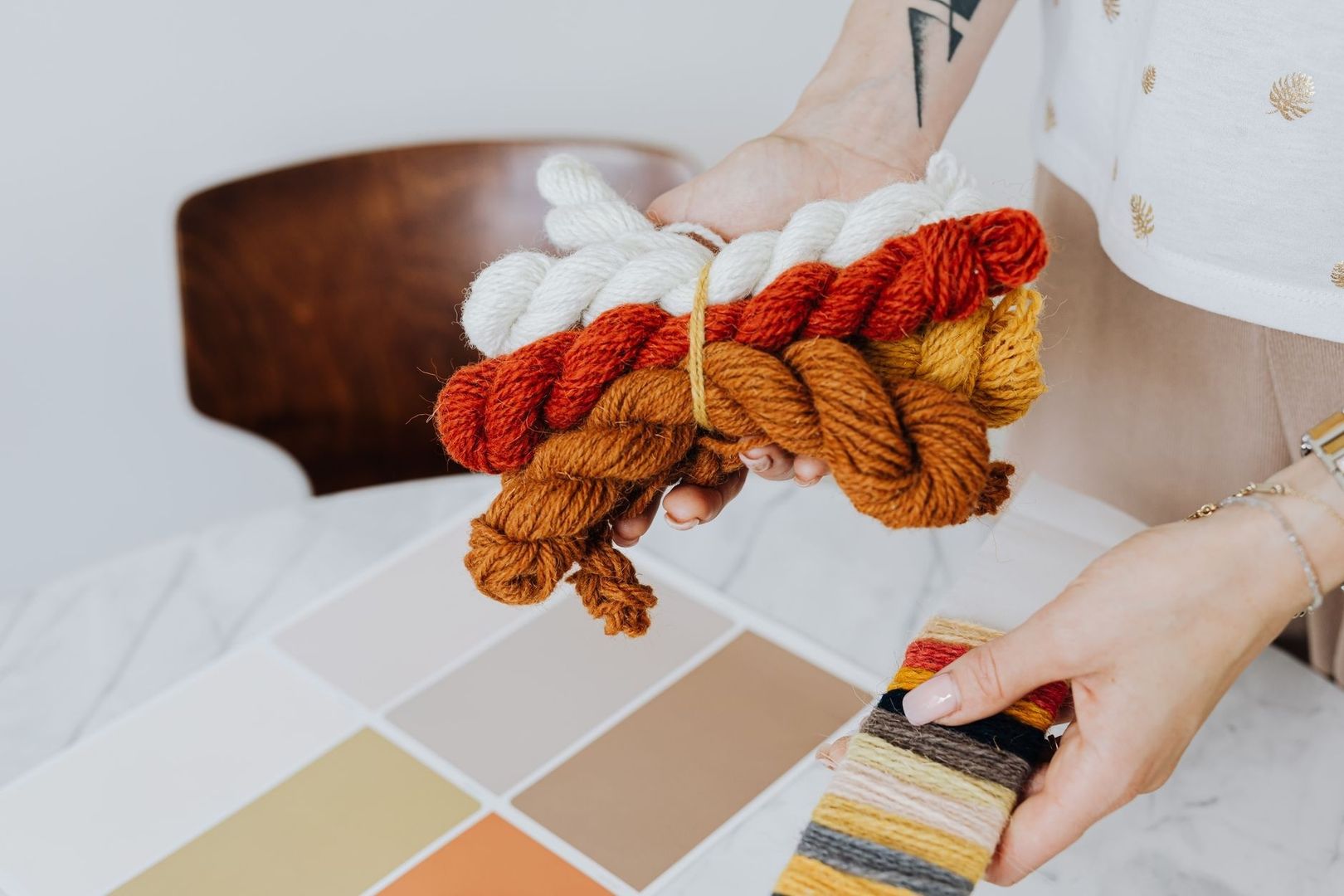
Historical dyes reward patience because they contain related compounds that respond differently to heat, pH, oxygen, and mordant chemistry. Madder root is valued for alizarin and related anthraquinones, producing scarlet, crimson, orange, purple, and brown depending on the extraction. Indigo depends on indigotin, a vat dye that must be chemically reduced before it can enter the fiber. Marigold contains yellow flavonoids, including luteolin-related compounds, and can provide lemon yellow through orange and green-yellow tones. The flowers, stems, concentration, and mordant all influence the result, which makes a carefully labeled swatch library essential.
| Dyestuff | Principal color compound | Best substrate | Typical lightfastness | Mordant or preparation |
|---|---|---|---|---|
| Madder | Alizarin and related anthraquinones | Wool, silk, cotton, linen | Good to very good when carefully processed | Alum; tannin and aluminum treatment for cellulose; calcium can support clear reds |
| Indigo | Indigotin | Cellulose and protein fibers | Good, especially with repeated dips and thorough oxidation | Vat reduction, controlled alkalinity, and oxygenation; no conventional mordant required |
| Marigold | Luteolin and other flavonoids | Wool and silk; prepared cellulose | Moderate, varying with plant material and bath conditions | Alum commonly preserves bright yellow; iron shifts toward olive and gray |
The table gives direction rather than a guarantee. Lightfastness ratings vary with species, harvest conditions, extraction method, shade depth, mordant, and the spectrum and intensity of display lighting. Marigold, for example, may produce a brilliant yellow but generally requires more cautious exhibition planning than indigo. Madder becomes more dependable when the red fraction is favored instead of allowing every yellow and brown component into the bath. Even the same plant can create a transparent, glowing color or a dense, earthy one depending on whether it is steeped, simmered, fermented, or extracted repeatedly.
Precision Extraction and Thermal Thresholds for Madder and Luteolin
Madder is a classic example of why temperature control matters. The roots contain a complex mixture, and the desired alizarin crimson must be encouraged while less desirable brown and orange components are kept in balance. Many madder protocols recommend extraction below approximately 65 degrees Celsius, with a mildly acidic environment and careful monitoring. The goal is a slow release of color rather than a violent boil that strips the bath of clarity. A thermometer is not an optional luxury here. It is one of the simplest tools for improving repeatability.
Excessive heat can shift the balance toward muddy tones and may degrade or transform sensitive anthraquinone-associated components. In practical terms, a bath that looks promising at the beginning can become dull if it is left unattended at a high simmer. Calcium also deserves attention. In suitable quantities, calcium can support the development of clear reds, while excessive alkalinity or an unsuitable mineral balance can push the shade toward purple, orange, or brown. Always test a small skein before committing a finished garment or large woven panel.
Marigold and weld require a similarly restrained approach, although the target color is different. Their luteolin-rich flavonoids can yield exceptionally clear yellows when the flowers or plant material are extracted gently. Prolonged aggressive heating may dull the yellow, especially when the bath becomes loaded with plant debris or begins to concentrate unwanted brown compounds. A controlled workflow helps preserve luminosity:
- Weigh the dry dye material and calculate it as a percentage of the dry fiber weight.
- Soak the material first so the plant tissue hydrates before heat is applied.
- Extract at a moderate temperature, then strain thoroughly to prevent loose particles from dulling the surface.
- Introduce pre-wetted, mordanted fiber and move it gently so the color distributes without felting or creasing.
- Rinse, dry, and evaluate under neutral light, allowing the color to settle before making final judgments.
For reference, a marigold bath may be calculated at 25 percent of the weight of goods for a medium-strength extraction, although deeper shades may require a different ratio. Overdyeing can create sophisticated surfaces, such as a yellow ground deepened with indigo or warmed with a red botanical dye. Record each stage, because subtle differences in concentration and temperature often produce more useful design information than a single dramatic result.
The Chemistry of Atmospheric Vat Reduction with Indigo
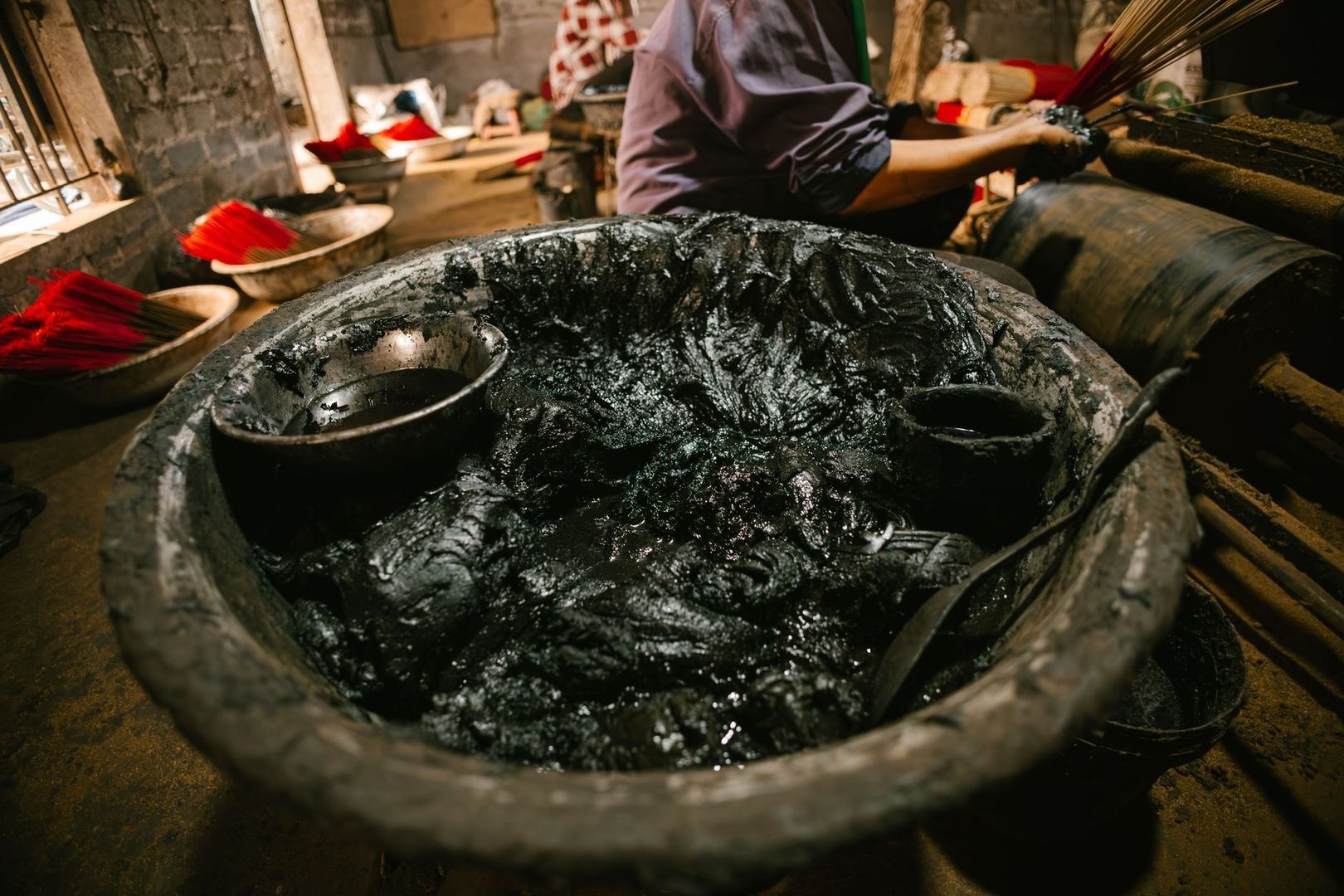
Indigo behaves differently from a mordant dye. The blue indigotin molecule, commonly represented as C16H10N2O2, is insoluble in water and cannot simply be simmered into a dye bath. It must first be reduced into leuco-indigo, a water-soluble form with an affinity for the fiber. Once the fiber is removed from the vat, atmospheric oxygen converts the leuco form back into insoluble blue indigotin. That transformation is the visual drama of an indigo vat: the cloth enters pale or nearly invisible and gradually develops blue as it meets air.
Reduction systems vary in speed, odor, safety profile, and color behavior. Sodium hydrosulfite and thiourea dioxide can produce efficient, predictable vats, but sulfur-based reducers may release irritating gases, including hydrogen sulfide and sulfur dioxide, particularly when conditions are poorly controlled. They require excellent ventilation, careful handling, and responsible disposal. Natural systems based on sugars, fermentation, plants, or minerals reduce the vat more gradually. That slower action can be an advantage for studio artists because only part of the indigo may be reduced at a time, allowing incremental color development and more responsive mixing.
A natural vat still requires chemical discipline. Alkalinity must be high enough to support reduction without becoming unnecessarily caustic, and the vat needs time to establish a stable balance between reducing conditions and oxygen entering from the surface. A useful working routine includes:
- Measure pH rather than relying on appearance, since a golden, greenish, or cloudy surface can be misleading.
- Stir gently and allow the vat to rest, minimizing unnecessary oxygen incorporation.
- Dip briefly and repeatedly rather than forcing an extremely dark shade in one immersion.
- Expose the fiber fully between dips, giving oxidation time to build the blue layer.
- Rinse only after the color has developed, then wash gently to remove unfixed particles.
Deep, rub-fast blue develops through repetition, not haste. Multiple thin deposits generally create a more dimensional surface than one overloaded dip, particularly on yarns and textured cloth. The same principle supports design control: lighter blues can be reserved for translucent layers, while repeated dips create saturated grounds for embroidery, appliqué, or sculptural textile forms. Use gloves, eye protection, and a dedicated vat area, and treat every alkaline or reducing bath as a chemical workspace rather than a casual kitchen experiment.
Elevating Studio Craft Through Chemical Fluency
Archival natural dyeing does not mean eliminating variation. It means making variation intentional. The most reliable studio practice controls the factors that can be controlled: fiber identity, scouring, mordant percentage, dye-to-fiber ratio, extraction temperature, pH, bath volume, immersion time, oxidation, and drying conditions. Once these variables are understood, the remaining shifts in plant material become part of the design language rather than a source of confusion.
Documentation is the quiet tool behind polished results. Record the mineral content of the water when possible, the dry weight of the fiber, the quantity and origin of the dye material, mordant calculations, bath temperature, pH, extraction duration, and the number of dips or rinses. Attach a labeled swatch to the record and note how the color changes after washing and light exposure. That archive becomes a personal technical library, allowing successful madder crimsons, luminous luteolin yellows, and layered indigo blues to be recreated with confidence. Chemical fluency does not diminish the poetry of botanical color. It gives that poetry a durable structure, enabling sustainable textile design to remain beautiful long after the first vivid impression.