The Geometry of Getting Dressed: Using the Rule of Thirds to Balance Visual Weight
The Geometry of Getting Dressed
A wardrobe can contain beautiful pieces and still produce an unconvincing outfit when its proportions divide the body too evenly. The familiar 50/50 split, created when a top ends at the widest part of the hips or a jacket meets trousers directly across the middle, can bisect the torso and interrupt the eye”s movement. Instead of creating intention, the outfit becomes two equal blocks. This is especially noticeable with oversized garments, whose extra fabric already carries substantial visual weight. A considered proportion can make oversized clothing feel confident, rather than accidental or overwhelming.
The Rule of Thirds offers a more dynamic alternative. Borrowed from painting, photography, film, and graphic composition, it divides a visual field into unequal but harmonious sections, most often in 1:2 or 2:1 relationships. Applied to dressing, the rule does not ask you to measure your body rigidly. It asks you to examine the outfit as a composition of shape, line, color, and texture. Clothing becomes a form of structural architecture, with foundation pieces, statement layers, and finishing details working together to distribute visual weight. The goal is a silhouette in which one part leads, another supports, and the eye travels naturally between them.
Deconstructing the Math of Visual Weight
Symmetry has a calming quality, but perfect visual symmetry is not always flattering or expressive in clothing. When a coat, sweater, and trouser line all meet at similar horizontal points, the eye encounters a sequence of abrupt stops. An asymmetrical division creates rhythm and tension. A cropped jacket may reveal a long, uninterrupted leg line, while a long coat may form a strong upper structure over a narrow base. The outfit feels deliberate because the visual break occurs away from the center.
The Rule of Thirds is best understood as a practical adjustment tool, not a universal law. A 1:2 ratio might place a shorter top over high-waisted trousers or a full skirt, allowing the lower section to dominate the composition. A 2:1 ratio reverses the emphasis, using a long-line coat, tunic, or extended cardigan to create a substantial upper field above a relatively compact hem and footwear. The principles of proportion, balance, emphasis, and line are central to fashion design, as outlined by the Fashion Institute of Technology.
| Ratio | Eye movement | Line flow | Aesthetic tension |
|---|---|---|---|
| 50/50 | Stops at the middle | Often feels divided | Low, potentially static |
| 1:2 | Moves from a compact top into an extended base | Encourages vertical length | Clear, grounded, and energetic |
| 2:1 | Travels down a dominant outer layer before reaching a precise hem | Creates a strong descending line | Architectural and composed |
| Uneven layered ratio | Moves through several staggered breaks | Creates rhythm and depth | Expressive, provided the layers remain controlled |
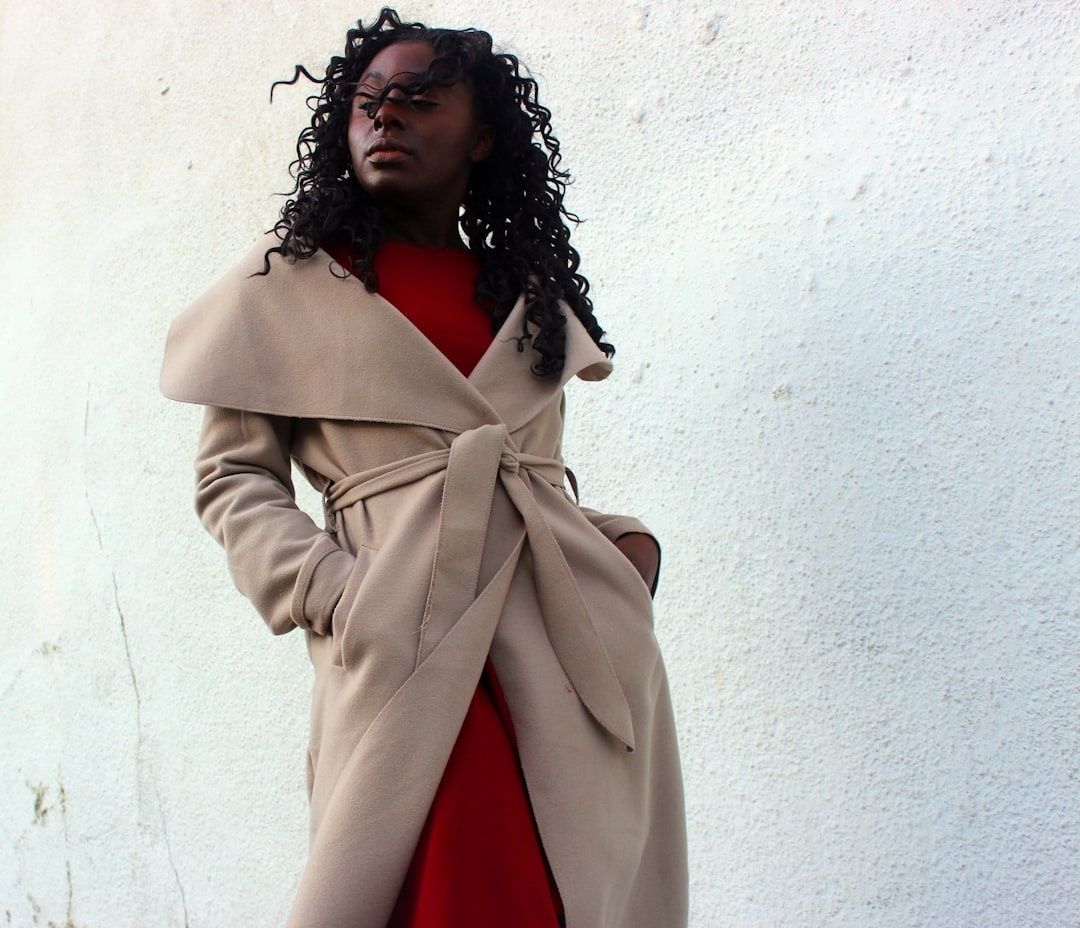
Visual breaks can occur anywhere one design element changes into another. A belt, exposed wrist, contrasting trouser hem, open coat edge, or change in fabric value can establish the point at which the composition shifts. This means the apparent ratio of an outfit is not determined by garment length alone. A dark coat worn open over a lighter column dress may create one dominant vertical field, while a bright belt can sharply redraw the waist and move the focal point upward or downward.
Balancing Bulk with Precision Architecture
Oversized clothing becomes difficult when every component communicates the same degree of mass. A voluminous puffer worn over a dense cable-knit sweater and wide, heavy trousers creates few visual pauses. The fabrics merge into one large shape, and the body”s natural points of articulation disappear. The issue is not that the wearer has too much volume, nor that the garment is inherently unflattering. The issue is that the composition lacks hierarchy.
Think of the outfit as a structure requiring both load-bearing forms and clean joints. A quilted puffer, heavyweight wool overcoat, brushed mohair knit, or boiled felt jacket can serve as the dominant architectural element. Underneath, a streamlined foundation gives the eye a precise route through the volume. Slim trousers, a fitted column dress, a fine-gauge turtleneck, or a smooth jersey layer can provide that controlled counterpoint. This approach does not conceal the figure. It frames volume intentionally, much as a strong border gives a painting definition.
Tactile contrast is equally important. Similar bulky textures tend to collapse into a single visual mass, while different surfaces help each layer retain its identity. Pair a matte quilted jacket with polished leather boots, a brushed coat with compact knitwear, or a sculptural sweater with smooth tailored trousers. Useful controls include:
- Choose one dominant volume and let surrounding pieces clarify its shape.
- Use fine or smooth fabrics beneath thick outer layers to reduce visual congestion.
- Expose a controlled area of skin at the wrist, ankle, or neckline to create breathing room.
- Check shoulder width carefully, especially in structured oversized jackets, where excess fabric can look simply too large.
- Distinguish intentional oversized design from poor fit through sleeve length, shoulder placement, and the garment”s original shape.
Small adjustments often determine whether a large garment looks sculptural or shapeless. A sleeve cuffed once can reveal the wrist and create a crisp horizontal reset. A coat worn open can establish two long vertical edges, while fastening it may turn the same garment into a single uninterrupted block. Tailoring also matters. A hem shortened by a few centimeters, a sleeve corrected at the cuff, or a waist subtly shaped can restore the intended proportion without eliminating the garment”s generous character.
Four Tactical Formulas to Command Proportion
Formulas are useful because they turn an abstract design principle into a repeatable dressing method. They should not restrict experimentation; they provide a starting structure from which personal variations can develop. Before adding accessories, identify which garment should carry the greatest visual weight, then make every supporting piece reinforce that decision.
- The cocoon overcoat. Let a rounded, long, or generously cut overcoat occupy roughly two thirds of the upper composition. Balance it with tapered ankle trousers, narrow leggings, or a precise straight-leg base that occupies the remaining third. The exposed ankle and concentrated footwear prevent the coat from becoming a single heavy column. This formula works particularly well when the coat has a strong shoulder, curved hem, or substantial wool texture.
- The cropped heavy knit. Use a dense, oversized sweater as the compact upper third, ending it near the natural waist or high hip. Pair it with architectural wide-leg trousers that carry the lower two thirds. The trousers should have enough structure to hold their line, whether through pleats, a sharp crease, or a firm drape. A tucked or shortened hemline reveals the trousers” rise and allows their width to look intentional rather than accidental.
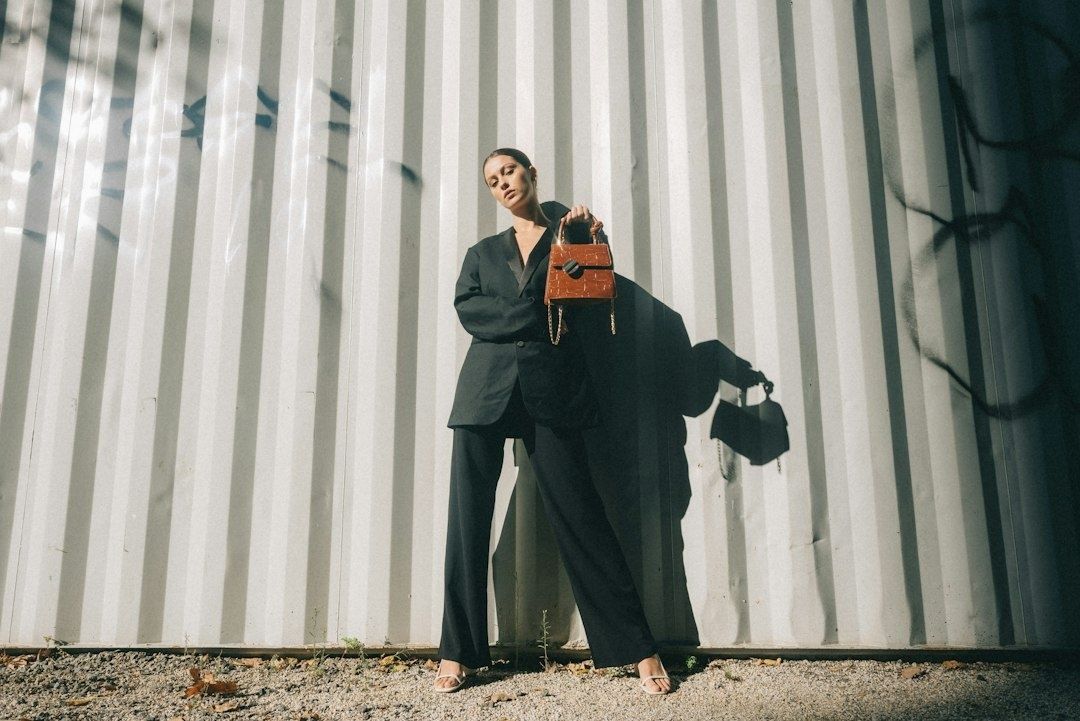
- The structured blazer and column dress. Place a tailored blazer over a monochromatic streamlined dress to create a clear outer frame around a continuous inner line. The dress supplies length and unity, while the blazer introduces a compact architectural interruption at the shoulders and waist. Keeping the color family close prevents the jacket from slicing the body into disconnected blocks. Rolled sleeves or an open front can further refine the proportion.
- The belted tunic. A long tunic naturally creates a 2:1 relationship, but a belt allows the wearer to redraw the break point manually. Position it at the waist for a sharper hourglass interruption, slightly above the waist for a lengthening effect, or lower on the hip for a relaxed, elongated arrangement. The belt should relate to the fabric”s weight. A narrow belt suits fluid cloth, while a wider belt can anchor a dense knit or substantial woven tunic.
Each formula can be adjusted through color and contrast. A bright top over dark trousers makes the upper third more prominent, while a tonal outfit shifts emphasis toward silhouette and texture. A long coat in a deep neutral can recede slightly, allowing vivid trousers or sculptural shoes to control the lower third. The most successful combinations maintain a clear hierarchy, even when several pieces are oversized.
Refining Lines Through Breakpoints and Finishes
Once the main ratio is established, finishing details can sharpen or soften the result. Cuffs, exposed wrists, and ankle crops act as deliberate punctuation marks. They interrupt broad surfaces and show where one section ends. A cropped trouser with a low-profile shoe may emphasize lightness, while a full-length trouser falling over a pointed boot extends the lower line. Footwear therefore determines whether the base feels truncated, grounded, or elongated.
- Use pointed or almond-shaped shoes to continue a narrow visual line.
- Choose substantial soles when a voluminous coat needs a grounded foundation.
- Match boot and trouser color when the goal is uninterrupted length.
- Use a contrasting shoe when a clear lower breakpoint will improve the composition.
- Open a collar or neckline to vent vertical volume around the face and chest.
Neckline geometry deserves particular attention. A high crew neck can reinforce a compact, enclosed upper shape, while a V-neck, open shirt collar, or unfastened coat creates a vertical channel through heavy layering. These openings are not merely decorative. They redirect the eye, reduce the sensation of density, and connect the face to the rest of the outfit. Diagonal and curved lines can also redirect visual weight, while vertical lines generally support an elongated impression, principles discussed in research on silhouette harmony and body-responsive fashion design.
Before leaving the house, assess the complete silhouette in a full-length mirror, preferably from several distances. Look first at the outline rather than individual garments. Is the eye drawn toward a clear focal point? Does one section dominate while another supports it? Are the sleeves, hems, and shoes creating intentional breaks, or are they stopping at arbitrary points? A photograph can reveal imbalances that disappear in a close mirror view. Make one adjustment at a time, such as opening the coat, raising the belt, cuffing the sleeve, or changing the shoe, and observe how the entire structure shifts.
Mastering Your Everyday Masterpiece
The Rule of Thirds makes dressing feel less like a search for the correct size and more like the construction of a visual composition. Your closet becomes an architectural palette of long lines, compact forms, dense textures, open spaces, and controlled interruptions. A dramatic coat does not need to be diminished. It needs a foundation capable of giving its volume direction. Likewise, a wide trouser or sculptural knit can become elegant when its supporting proportions are selected with care.
Experiment with asymmetry, document combinations that feel balanced, and treat each outfit as a small design study. The strongest result may come from a 1:2 split one day and a 2:1 arrangement the next. What matters is not obeying a rigid mathematical rule, but learning to recognize where the eye pauses and how the lines continue. When proportion, texture, and finishing details work together, clothing moves beyond standard sizing and becomes a confident design statement shaped precisely for the wearer.