The Mechanics of Fabric Drape: How Plain, Twill, and Satin Shape Your Silhouette
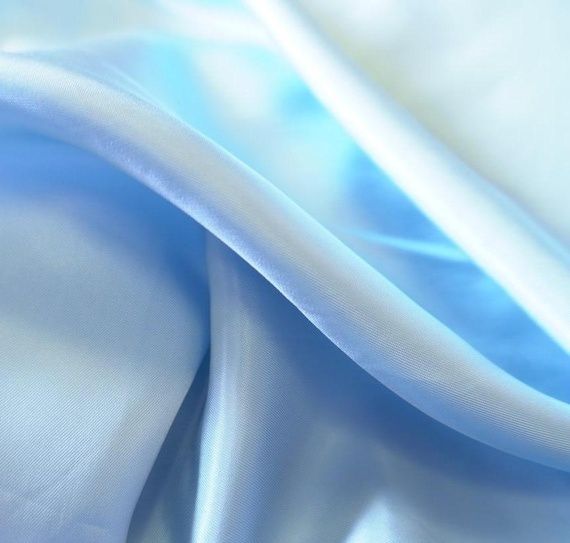
Mastering the Invisible Architecture of Fabric Movement
Choosing fabric by fibre content alone is one of the quickest ways to create a disappointing silhouette. Two textiles labelled 100 percent cotton, silk, or wool can behave entirely differently once cut into a sleeve, skirt, trouser leg, or sculpted bodice. One may hold a crisp fold, while another collapses into soft ripples. The difference lies in the hidden architecture of the cloth: yarn twist, thread spacing, weave structure, finishing, and the balance between warp and weft.
Drape is the visible result of gravity working against those internal forces. It describes how fabric bends, folds, collapses, and recovers when unsupported, but it is not a single quality. It is an interplay between fibre resistance, thread tension, friction at intersections, fabric weight, and the direction of the grain. Once these mechanics become familiar, fabric selection becomes less dependent on trial and error. Pattern cutting becomes a more predictable act of engineering, and the intended silhouette has a much better chance of appearing in the finished garment.
The Foundational Mechanics Behind Drape Coefficient and Fiber Resistance
A fabric bends when its yarns can move sufficiently under their own weight. Yarn twist has a noticeable effect: highly twisted yarns are generally firmer and more resistant to bending, while loosely spun yarns can feel softer and respond more readily to gravity. Thread count matters as well. Dense fabrics contain more material and more points of contact within a given area, which can increase resistance to folding. Warp and weft density may also be unequal, so a fabric can bend more easily in one direction than the other.
These properties are often discussed through measurable terms such as bending length, flexural rigidity, and drape coefficient. Bending length describes how far a strip projects before its own weight causes it to bend, while flexural rigidity expresses resistance to that bending. In standard drape meter testing, a low drape coefficient reflects a fabric that yields readily to gravity, collapsing downward into supple, undulating folds that cast a small projected area, whereas a higher drape coefficient indicates greater stiffness and resistance to bending, causing the material to extend or flare outward in a more self-supporting shape. These measurements are useful, but the designer still needs to understand how the cloth behaves in three dimensions.
Two-dimensional stiffness is the resistance felt when a fabric is folded, creased, or bent along a single plane. Three-dimensional fluidity is what happens when the same material is allowed to form volume around a body or dress form. A fabric may feel firm in the hand yet create attractive rounded folds when cut generously. Another may feel soft as a flat swatch but twist, collapse, or stretch unpredictably once seams and curved edges are introduced.
For a more disciplined tactile assessment, compare swatches under consistent conditions rather than relying on a quick touch in a shop. The NC State fabric hand evaluation method uses controlled handling, conditioning, and descriptive scales such as hard to soft, rough to smooth, and non-stretchy to very stretchy. A practical studio version can include the following checks:
- Fold the swatch lengthwise and crosswise to compare directional resistance.
- Hold one edge over a table and observe the bending length before the fabric drops.
- Gather the cloth in one hand, then release it to study recovery and crease memory.
- Place the swatch over a curved form to see whether it clings, bridges, or forms angular folds.
- Repeat the test after pressing or washing if the finished garment will receive either treatment.
Plain Weave and Crisp Geometric Silhouettes
Plain weave uses a balanced one-over, one-under sequence. Each warp yarn crosses each weft yarn frequently, creating a compact lattice with a high number of interlacing points. This frequent contact increases friction and restricts the ability of individual threads to slide. The result is often a stable fabric with a clear surface, reliable grain, and a tendency to preserve geometric shapes.
Plain weave does not automatically mean heavy or stiff. A loosely set muslin can be open and flexible, while tightly woven linen or cotton can feel remarkably crisp. Density, yarn size, twist, fibre type, and finishing all modify the basic structure. Nevertheless, the frequent interlacing characteristic of plain weave often makes it an effective choice when the pattern depends on controlled edges rather than continuous collapse. Its long history is documented in this authoritative overview of weaving, which places the basic interlaced structure within the earliest traditions of textile construction.
Use a firm plain weave for boxy bodices, architectural jackets, structured sleeves, and pleats that need to remain legible. It can also support standalone volume in a peplum, sculpted pocket, or gathered panel. When cutting sharp pleats, align the design carefully with the grain and press each fold progressively rather than forcing the entire shape at once. A fabric with too much openness may soften after pressing, while a dense, crisp version can preserve the intended geometry through wear.
Twill Weaves and Directional Diagonal Fluidity
Twill is created by shifting the over-and-under sequence from one row to the next. The staggered interlacings produce diagonal ribs, often called wales, and reduce the number of direct locking points compared with a balanced plain weave. Common structures include 2/1, 2/2, and 3/1 twills, but these labels describe construction rather than a complete fabric specification. Fibre, yarn size, weight, finish, coating, and density still determine the final behaviour.
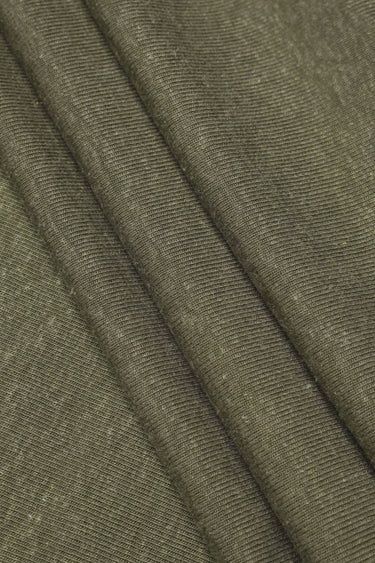
Because fewer intersections constrain the yarns, twill can offer greater mechanical yield. This does not necessarily mean stretch in the elastane sense. Instead, the yarns may shift slightly, allowing the cloth to mold around the body and recover from movement. The diagonal structure can also make the fabric feel more forgiving across hips, elbows, knees, and curved seams. Direction remains important: a garment cut across the diagonal may develop more flexibility than the same cloth cut along the straight grain.
This balance of durability and pliability explains the usefulness of twill in tailored trousers, trench coats, utility garments, denim, chino cloth, drill, and gabardine. Yet the word twill alone is not enough for a technical decision. A lightweight rayon twill and a heavy cotton drill will not produce the same silhouette. Before committing to a design, test the exact fabric for abrasion, recovery, seam behaviour, pressing response, and laundering. For close-fitting trousers, check whether the knees bag. For a coat, examine whether the cloth can support a collar, sleeve head, and welt pocket without becoming bulky.
Satin Weaves and Liquid Sculptural Cascade
Satin structures extend warp or weft floats over several yarns before securing them at isolated tie-points. This spacing reduces the number of visible intersections and allows longer sections of yarn to remain relatively unconstrained. The smooth surface associated with satin is therefore linked to its structure, not simply to the fibre used. Silk satin, polyester satin, acetate satin, and rayon satin may share a lustrous appearance while differing significantly in weight, friction, recovery, and durability.
Long floats can glide more readily against neighbouring yarns as gravity pulls the cloth downward. That movement produces the liquid cascade often desired in evening dresses, bias-cut slips, softly gathered skirts, scarves, and fluid sleeves. The fabric follows bodily contours instead of holding a rigid perimeter. It may also reflect light across every fold, making small changes in angle visually prominent.
That freedom requires careful handling. Satin can shift during cutting, especially when the surface is smooth and the pattern pieces are large. Use a stable cutting surface, secure the pattern without distorting the cloth, and mark with a method that will not damage the face. Bias cutting increases fluidity because the yarn system is placed diagonally to the body, but it can also encourage stretching, seam slippage, and uneven hems. Stabilize essential seams, allow the garment to hang before final hemming, and avoid excessive pressing that may flatten the surface or create unwanted shine.
- Support the fabric fully while cutting so its weight does not pull pattern pieces out of shape.
- Use fine, sharp needles and test the stitch length on a layered sample.
- Stay-stitch curved or bias edges when the pattern permits, especially near necklines and armholes.
- Hang the completed garment before levelling the hem, allowing gravity to reveal the true length.
Weave Comparison for Pattern Selection
The following comparison is a starting point rather than a substitute for testing. Each weave category contains many variations, and finishing can change the result dramatically. Treat the matrix as a design conversation between the pattern and the cloth: the stronger the shape demanded by the pattern, the more carefully the fabric must resist collapse.
| Weave | Structural firmness | Bias flexibility | Typical weight distribution | Useful applications |
|---|---|---|---|---|
| Plain weave | Often moderate to high, especially at dense settings | Usually controlled, though open versions may soften | Even and stable across the surface | Boxy bodices, crisp pleats, shirts, structured panels |
| Twill | Moderate, with construction-dependent durability | Often greater mechanical yield and directional movement | Can feel denser along diagonal ribs | Trousers, jackets, trench coats, workwear, tailored outerwear |
| Satin | Low to moderate constraint, depending on fibre and density | Often highly fluid, particularly on the bias | Weight falls into folds and vertical cascades | Eveningwear, draped skirts, fluid sleeves, scarves |
Before cutting, use a repeatable swatch routine rather than judging the fabric only by its hanging display. Cut samples with the warp, weft, and bias clearly marked. Compare them at the same size, because a larger piece reveals gravity-driven movement more accurately than a tiny shop sample. Test the face and reverse separately, and note whether the fabric rolls, curls, stretches, shines, or develops permanent creases.
- Identify the silhouette”s primary requirement: rigid outline, controlled molding, or fluid collapse.
- Match that requirement to the likely weave behaviour, then confirm the choice using the exact fabric.
- Drape a full-size or half-scale sample over the dress form, including important seams and gathers.
- Check the intended grain direction and compare straight-grain, cross-grain, and bias behaviour.
- Make a toile or test garment when the fabric is expensive, slippery, unstable, or difficult to replace.
Design With Confident Textile Intuition
Intentional fabric selection begins when fibre labels stop being treated as complete descriptions. Plain weave offers frequent interlacing and dependable geometry. Twill introduces diagonal movement, useful yield, and a practical balance between resilience and softness. Satin reduces constraint through extended floats, creating the graceful cascade that makes fluid garments look almost liquid. None is universally superior; each is a structural tool suited to a particular visual idea.
Build confidence through small, purposeful experiments. Pin swatches to a dress form, let them hang overnight, press test folds, and observe how seams alter the movement. A ten-minute drape study can reveal more than a long period of speculation at the cutting table. When the weave architecture supports the pattern blueprint, the finished garment does more than resemble the original sketch. It holds its intended balance, volume, and movement with the quiet precision of well-understood craftsmanship.